Shakira Isabel Mebarak Ripoll (pronounced /ʃəˈkɪərə/ shə-KEER-ə, Spanish: [ʃaˈkiɾa isaˈβel meβaˈɾak riˈpol]; born on February 2, 1977) is a Colombian singer, songwriter, dancer, and record producer.
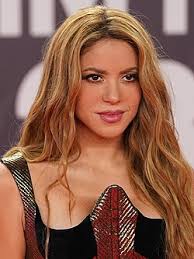
Often called the “Queen of Latin Music,” she has greatly influenced the music scene in Latin America and is recognized for helping to popularize Spanish-language music worldwide, which has led to a rise in the learning and use of Spanish globally.
Additionally, she is credited with paving the way for other Latin artists to enter the international market. Her achievements include winning four Grammy Awards and 15 Latin Grammy Awards.
Shakira began her music career with Sony Music Colombia when she was just 14 years old. She gained widespread recognition with her albums Pies Descalzos (1995) and Dónde Están los Ladrones? (1998). Her debut English album, Laundry Service (2001), sold over 13 million copies globally, making it the best-selling album by a female Latin artist.
Her continued success was bolstered by her Spanish-language albums Fijación Oral, Vol. 1 (2005), Sale el Sol (2010), El Dorado (2017), and Las Mujeres Ya No Lloran (2024), all of which reached the top of the Billboard Top Latin Albums chart, establishing her as the first woman with number-one albums in four different decades. Her English albums Oral Fixation, Vol. 2 (2005), She Wolf (2009), and Shakira (2014) have all achieved platinum status around the world.
Shakira ranks as one of the top-selling artists globally, boasting a plethora of number-one hits such as “Estoy Aquí,” “Ciega, Sordomuda,” “Whenever, Wherever / Suerte,” “Underneath Your Clothes,” “Objection (Tango),” “La Tortura,” “Hips Don’t Lie,” “Beautiful Liar,” “She Wolf,” “Waka Waka (This Time for Africa),” “Loca,” “Rabiosa,” “Can’t Remember to Forget You,” “Dare (La La La),” “La Bicicleta,” “Chantaje,” “Bzrp Music Sessions, Vol. 53,” and “TQG.”
Shakira participated as a coach for two seasons on the American singing competition series The Voice (2013–2014), lent her voice to characters in the animated movies Zootopia (2016) and Zootopia 2 (2025), and was an executive producer and judge on the dance competition show Dancing with Myself (2022).
She was nominated for the Rock and Roll Hall of Fame in 2026 and was twice voted the Top Female Latin Artist of the Decade by Billboard in the 2000s and 2010s [20, 21].[22] Since 2006, Shakira has been an integral part of FIFA World Cups, serving as an emblem for its creative, promotional, and humanitarian endeavors.
Known for fusing Western and Middle Eastern elements, Shakira is considered a “international phenomenon” and has written or co-authored the great majority of the songs and lyrics she has sung during her career [24, 25].[26] In 2011,
she was named to the President’s Advisory Commission on Educational Excellence for Hispanics and won the Latin Recording Academy Person of the Year and Harvard Foundation Artist of the Year honors for her charitable and humanitarian endeavors, including the Barefoot Foundation.
In addition, the French government bestowed upon her the title of Chevalier of the Order of Arts and Letters in 2012. She promotes the rights and interests of children, women, the Latino minority in the United States and Canada, the Global South, and other marginalized groups.
Early life of Shakira
On February 2, 1977, Shakira Isabel Mebarak Ripoll was born in Barranquilla, a city on Colombia’s northern Caribbean coast.[27] William Mebarak Chadid and Nidia Ripoll Torrado are her parents. Although she has distant Italian ancestry through an ancestor with the surname Pisciotti, her parents are of Catalan and Lebanese heritage [28, 29].[30]
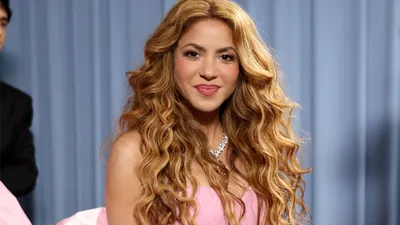
She went to Catholic schools and was nurtured in a Catholic home.[31] Shakira’s father’s first marriage produced eight elder half-siblings.[32]
At the age of four, Shakira composed her first poem, “La Rosa de Cristal” (also known as “The Crystal Rose”), and she went on to create poetry. The poems became song lyrics as her musical tastes solidified.[32] Her nineteen-year-old half-brother was murdered when she was two years old.
in an accident involving a motorbike. Six years later, she wrote her debut song, “Gafas Oscuras” (‘Dark Glasses’), using a typewriter and a guitar that her aunt had given her.[33] [34] Her father, who wore dark spectacles for years to conceal his anguish, served as the inspiration.
Before her father, a jeweler, filed into bankruptcy when she was eight years old, Shakira had a rather affluent upbringing. Her parents sent her to Los Angeles to spend some time with family. She had to adapt to a new world when she returned since their two vehicles, furnishings, and color TV all vanished. At the age of 14, she managed to purchase a vehicle for her parents.after getting paid to release the Magia album. [32]
Shakira first heard the doumbek, a traditional festive Arabic music drum used to accompany belly dancing, when her father took her to a nearby Middle Eastern restaurant when she was four years old. She got up on a table on her own initiative and began dancing; soon, she wanted to perform for everyone who could see. Every Friday morning at her Catholic school, she gave a belly dance demonstration.
Her parents, teachers, and fellow students supported her, believing she had a bright future as a performer. “Just her, dancing and singing on stage,” a former classmate recalled. [32][34] However, Shakira was turned down for school choir in second grade because the music teacher thought her vibrato was too strong; her classmates said she sounded like a goat.
She was frequently dismissed from class due to her hyperactivity [34][36]. [37] To increase Shakira’s appreciation for her humble upbringing and her father
Shakira attended a number of events in Barranquilla between the ages of ten and thirteen, where she became somewhat well-known for her singing and dancing. [34][38] She met Monica Ariza, a local theater producer, who was impressed by her and persuaded Ciro Vargas, an executive at Sony Music Colombia, to give her a tryout.
Satisfied with her performance, he arranged for additional Sony Music representatives to attend an audition in Bogotá, where Shakira performed three songs and impressed the executives enough to be signed at the age of thirteen for the recording of three albums
Career of Shakira
In June 1991, Sony Music Colombia released Shakira’s debut album, Magia. [40] When she was 13 years old, recording started in 1990. Shakira wrote most of the album’s songs, which include disco uptempo songs and pop rock ballads. [41] “Magia” was her debut single, along with “Sueños” and “Esta Noche Voy Contigo” on the album. [42] Only 1,200 copies of Magia were sold in Colombia; it was not a commercial success. [40]
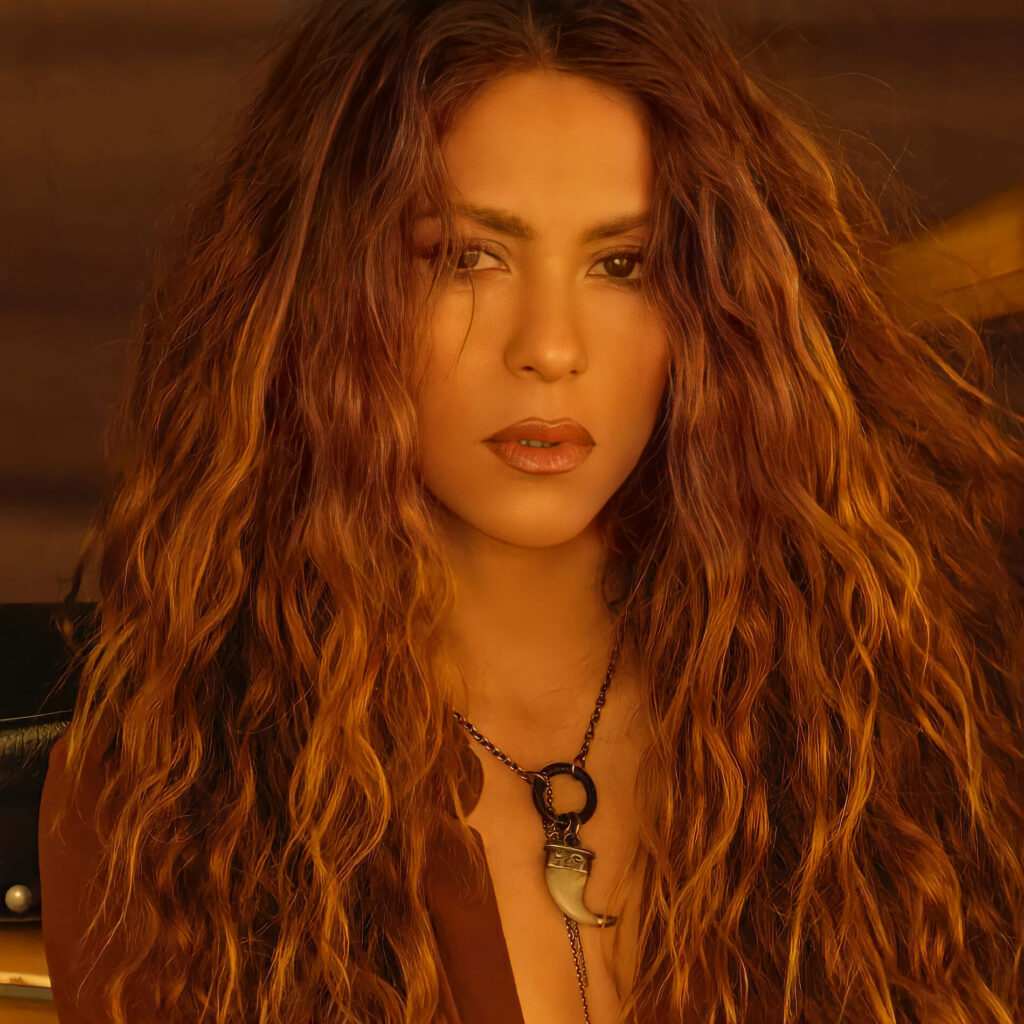
In February 1993, Shakira, who was not well-known outside of her home country of Colombia, received an invitation to perform at the Viña del Mar International Song Festival in Chile. Aspiring Latin American singers had the opportunity to perform their songs at the festival, and a panel of judges selected the winner. Shakira won third place with her rendition of the ballad “Eres.”.
Peligro, Shakira’s second studio album, came out in March 1993. The singles “Tú Serás la Historia de Mi Vida”, “Eres”, “Peligro”, and “Brujería” are included. Shakira was dissatisfied with the outcome, primarily with the production. Although the album received better reviews than Magia, it was still a commercial failure. [43][44] She portrayed Luisa Maria in the Colombian telenovela El Oasis from 1993 to 1994.
Shakira graduated from a convent secondary school at the age of 15 after being advanced in her coursework ahead of her age [24, 48]. However, she was unable to pursue further formal education due to her professional involvement in music. [43][49][50] The nuns at Colegio La Enseñanza, where she studied, expected their students to go to the town’s poorest neighborhoods and assist in teaching the unschooled children there to read and write.
“My system has successfully sown the seeds of their education. I think there is a God. In 2002, Shakira told the interviewer, “I believe in the sacraments.”. [34] Regarding her early career start, she stated: “I wouldn’t have done anything different myself, Dot. even though I believe I was deprived of adolescence. I never misbehaved as a teenager, and you have to do the same. I was so intent on achieving my objectives. At the age of 14, I was already an adult. Perhaps when I’m older, I’ll experience a delayed adolescence.
Breakthrough with Pies Descalzos and Dónde Están los Ladrones? Shakira recorded “₂Dónde Estás Corazón?” for the Nuestro Rock Volumen II compilation album in 1994. [38][51][52] Sony Music Colombia made the decision to proceed with her third studio album following the song’s success in Colombia [34]. [38][52] Luis Fernando Ochoa, who would go on to become Shakira’s main musical collaborator for the next three albums, started writing and recording the album. [53] October 1995 saw the release of Pies Descalzos, her third studio album.
On the U, it peaked at number five. The S. chart for Billboard’s Top Latin Albums. Six singles from the album peaked in the top 20 in the United States. The S. “Estoy Aquí,” “₂Dónde Estás Corazón?” “Pies Descalzos, Sueños Blancos,” “Un Poco de Amor,” “Ant−,” and “Se Quiere, Se Mata” were among the top five hits on the Latin chart. [54] Pies Descalzos attained the top spot in eight countries [45], and the album was certified platinum by the RIAA in August 1996.
In 1997, Shakira won three Billboard Latin Music Awards: Best New Artist, Album of the Year for Pies Descalzos, and Video of the Year for “Estoy Aqui”. [57] The Remixes, her remix album, sold over a million copies that year. [43][58] The Colombian president appointed Shakira as a national cultural ambassador at the age of 19, a title she shares with author Gabriel García Márquez. [59] In September 1998, Shakira’s fourth studio album, Dónde Están los Ladrones?, was released.

Gloria and Emilio Estefan’s studio in Miami served as the recording location. [60][59] Shakira handled the artistic production, and Emilio Estefan was listed as the executive producer. [38][45][59] Pies Descalzos was not as successful globally as Dónde Están los Ladrones? [43] [45] The album peaked at number 131 on the U.S. To S. Billboard 200 and occupied the top position on the U. To S. Latin albums for eleven weeks. [45] More than 7 million copies were sold globally, with 1.5 million sold in the United States
Shakira was nominated for Best Latin Rock or Alternative Album at the 1999 Grammy Awards. [59] Her first live album, MTV Unplugged, was recorded in New York City as MTV Unplugged’s first Spanish language broadcast on 12 August 1999 and released in early 2000. The album topped Latin charts and sales figures, and the performance received high praise from American critics [62]. [45]
In March 2000, Shakira set out on Tour Anfibio, a two-month tour that included performances in the US and Latin America. [43] She received an MTV Video Music Award for “Ojos Así” in August 2000 under the People’s Choice – Favorite International Artist category. [43] Shakira performed “Ojos Así” at the first Latin Grammy Awards ceremony in September 2000. She was nominated in five categories: Album of the Year and Best Pop Vocal Album for MTV Unplugged; Best Female Rock Vocal Performance for “Octavo Día”; Best Female Pop Vocal Performance for “Ojos Así”;
After the triumphs of Dónde Están los Ladrones, what was the significance of the Laundry Service and English transition? Shakira initiated the process of creating an English crossover album through MTV Unplugged. [59] Because of her “universally catchy pop-rock melodies, cerebral lyrics, unwavering self-determination, and natural sex appeal” and her “universally catchy pop-rock melodies, Emilio Estefan, her manager took an early notice of Shakira’s potential for a “crossover” into the U.S. music market.
Gloria Estefan’s assistance improved Shakira’s English language skills, which was reported in [59]. At the end of August 2001, Shakira released the first and lead single from their fifth studio album, “Whenever, Wherever,” which was called “Suerte” in the simultaneously published Spanish language version. The song’s instrumentation, which included the pan flute and charango, was heavily influenced by Andean music.
By achieving a top spot in the majority of countries, it achieved international success. It reached number six on the Hot 100 in the U.S. [45] On 13 November 2001, the new album was released, titled Laundry Service in English-speaking countries and Servicio de Lavanderia in Latin America and Spain. The same songs are arranged in different order in Servicio de Lavanderia. Shakira sings nine out of thirteen English songs. The album’s U.S. debut was at number three.
In its initial week, the Billboard 200 chart achieved a record sales of over 200,000 records, with the chart selling over 200,000 records. Later, it was granted triple platinum certification. Shakira’s musical presence in the mainstream North American market was established by its success, which was reported
The fans of Shakira were divided on Laundry Service, the crossover process, and its manifestations; her detractors argued that the singer was abandoning her essence and turning into a whiter, sexier version of herself that would be more palatable for Anglo audiences, given her blond hair, English-language singing, and new look. [52]
Shakira defended her vanity by blaming her blonded hair, saying, \”I am so certain about what I represent for my people and who I am. [53] I know how deeply rooted I am in Latin America. I am also very proud to be Latinx and Colombian, and I share that with the world whenever I can. [66] In 2001, she explained to the Colombian newspaper El Tiempo that she had opted for musical stylistic fusion: \”Fusion gives me the freedom to shed any type of label that people want to put on me.
In 2000, Freddy DeMann succeeded Emilio Estefan as Shakira’s manager and secured her a multimillion-dollar worldwide commercial contract with Pepsi.[66] “Ask for More,” “Pide Más,” “Knock on My Door,” and “Pídeme el Sol” are the four songs that Shakira released for Pepsi. In 2002, the CD and DVD album Laundry Service: Washed and Dried was released. It includes a few remixes and other renditions of the original collection’s songs.[69] Grandes Éxitos, Shakira’s Spanish greatest-hits album, was released by Sony Music.
Shakira sang “Dude (Looks Like a Lady)” at Aerosmith’s MTV Icon in April 2002. She also joined VH1 Divas Las Vegas in 2002. [43][58] She won the International Viewer’s Choice Award with “Suerte / Whenever, Wherever” and performed “Objection (Tango)” at the 2002 MTV Video Music Awards in August.[58][70] Additionally, she received the Latin Grammy Award for Best Short Form Music Video for the Spanish rendition of “Objection (Tango)”.
She took home five MTV Video Music Awards Latin America in October, including Best Female Artist, Best Pop Artist, Best Artist – North (Region), Video of the Year (for “Suerte”), and Artist of the Year.[43][58] Shakira started the Tour of the Mongoose in November 2002, and by May 2003, 61 performances had taken place.
Oral Fixation, volume 2, and Fijación Oral, volume 1
Shakira’s 2006 performance at the Rock in Rio festival
Shakira composed sixty songs in both Spanish and English in preparation for her upcoming productions. Twenty of these were chosen by her to be used in two albums, one for each language.[45][71]
“La Tortura, featuring Spanish balladeer Alejandro Sanz, is the lead single from Shakira’s sixth studio album, Fijación Oral, Vol. 1, which was released in April 2005.[58] It stayed on the Billboard Hot Latin Tracks chart for a record 25 weeks.[43][72] It had great positions all across the world, peaking at number one in Spain and number 23 on the Hot 100.[58] One of the first songs in Spanish to be performed at the MTV Video Music Awards was “La Tortura”;
Pingback: Shocking Things About GOAT Ronaldo 2026 - Worldnewsupdates.online