Healthcare Fraud Cases Medical professionals, patients, and anyone who purposefully mislead the healthcare system in order to get unlawful benefits or payments may conduct Healthcare Fraud Cases.
Healthcare Fraud Cases involving healthcare is not a crime without victims. Everyone is impacted, including businesses and individuals, and it results in annual losses of tens of billions of dollars. It may result in higher health insurance costs, more needless medical treatments, and more taxes.
For both government and commercial insurance systems, the FBI is the main organization responsible for looking into healthcare fraud.
The FBI looks into these crimes in collaboration with
Local, state, and federal organizations
Partnership for the Prevention of Healthcare Fraud Cases
Insurance organizations including the National Insurance Crime Bureau, the National Healthcare Anti-Fraud Association, and insurance investigative units
Common types of Healthcare Fraud Cases
Healthcare Fraud Cases committed by medical providers
Unbundling: submitting numerous invoices for the same service; duplicate billing: filing multiple claims for the same service; phantom billing: paying for a service visit or supplies the customer never received; and upcoding: invoicing for a more costly service than the consumer actually received
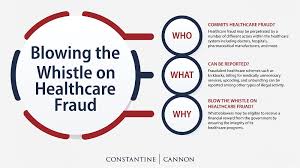
Healthcare Fraud Cases committed by patients and other individuals
Identity theft/identity swapping: using someone else’s health insurance or permitting someone else to use your insurance; impersonating a Healthcare Fraud Cases professional: offering or billing for medical services or equipment without a license; and bogus marketing: persuading people to give their health insurance identification number and other personal information in order to bill for non-rendered services, steal their identity, or enroll them in a phony benefit plan.
Healthcare Fraud Cases involving prescriptions
forgery: Creating or using forged prescriptions diversion: Diverting legal prescriptions for illegal uses, such as selling your prescription medication doctor shopping: Visiting multiple providers to get prescriptions for controlled substances or getting prescriptions from medical offices that engage in unethical practices
Protect yourself
Safeguard your health insurance details. Think of it like a credit card. Be careful while using it in the drugstore or doctor’s office, and don’t give it to anybody else.
Watch out for free services. If a “free” service requests your health insurance information, it is most likely not free and may be illegally billed to your insurance provider.
Regularly review your explanation of benefits (EOB). Verify that the services, places, and dates on the bill correspond to what you really got. Get in touch with your health insurance provider if you have any concerns.
Prescription medication abuse
Prescription Healthcare Fraud Cases costs doctors, hospitals, insurance companies, and taxpayers a great deal of money. It is illegal to create or use falsified prescriptions. However, the biggest expense is human—addiction claims tens of thousands of lives every year. Use these tips to keep yourself and your loved ones safe:
If you are taking opioids, follow your doctor’s instructions completely and try to take them for as little time as feasible.
Never give someone else access to your medicines.
Talk to your doctor about alternatives to opioids.
Visit the CDC to find out more about the dangers of opioid usage.
Take any unused or expired painkillers to a DEA-approved take-back location so they may be disposed of.
How to report about Healthcare Fraud Cases
File a report at ic3.gov, the FBI’s Internet Crime report Center, if you think you have information on healthcare fraud or if someone you know may have been a victim of it.

Include as much of the following facts as you can when reporting healthcare fraud, regardless of the total amount:
names of healthcare providers (such as physicians, hospitals, pharmacies, and suppliers); if available, add information about their license number or national provider number (NPI).
dates that are pertinent, such as the date of service, the date of claim, any correspondence, payments, or the delivery of goods or services
description of services/items billed and dollar amount (you may attach a copy of your explanation of benefits or invoice if applicable); whether the services/items were received; whether the fraud caused harm to the patient; the method of communication, including phone numbers, email addresses, mailing addresses, and websites used by the perpetrator; the insurance carrier location (city, state) of all parties involved, including the beneficiary’s residence location and, if known, the provider/facility/supplier location;
photos of the product’s package label and contents, including any marketing or instruction inserts, for products that were paid for by mail, including wire transfers and prepaid cards (please include the names of the financial institutions, accounts, and account numbers).
details of your conversations with the con artist and the guidelines you received
any further organizations to whom you may have reported this, along with any reference numbers supplied
Original documents, emails, faxes, and conversation logs should be preserved wherever feasible. The complaint may include copies or pictures of any of the aforementioned materials.
455 defendants are charged in connection with about $6.5 billion in alleged fraud as a result of the national health care fraud takedown.
Today, the Justice Department announced the 2026 National Healthcare Fraud Cases Takedown, which resulted in charges against 455 defendants, including 90 physicians and other licensed medical professionals, for their alleged involvement in opioid abuse andHealthcare Fraud Cases schemes involving over $6.5 billion in false claims and serious patient harm, including death. With cases in 56 federal districts, 45 U.S. states and territories, and 50 state Healthcare Fraud Cases Control Units participating—the most in Department history—today’s takedown marks a new era in federal, state, and international collaboration to combat Healthcare Fraud Cases. Additionally, during the two-week Takedown, the following health care fraudsters were apprehended and returned to the United States thanks to extraordinary international cooperation:
One defendant in Kyrenia in relation to an over $3.7 billion scheme; two defendants in Estonia in relation to a $10.6 billion scheme that was previously charged; and one of the FBI’s Most Wanted Fraudsters in the Philippines in relation to a $1.2 billion telemedicine fraud scheme that was previously charged. The Takedown includes full-spectrum accountability for all criminal actors from corporate boardrooms to doctor’s offices; the seizure of nearly $182 million in cash, luxury cars, jewelry, and other assets; and the innovative use of data analytics to target the worst perpetrators.
A whole-of-government strategy is used in today’s coordinated enforcement action, which includes:
1,079 providers were suspended and 1,403 providers had their billing rights revoked by the Centers for Medicare and Medicaid Services (CMS).
Over 1,400 provider exclusions, 48 Civil Monetary Payment settlements totaling more than $73 million, and 25 actions under the Civil Monetary Penalties Law by the U.S. Department of Health and Human Services Office of Inspector General (“HHS-OIG”) seeking over $10 billion in payments to the Medicare Trust Fund from payments that CMS discovered and suspended prior to the funds being paid to the fraudulent providers.
In addition to $23 million in civil settlements with 31 defendants, there are civil charges against 13 defendants for $14.8 million in health care fraud schemes.
Since October 1, 2025, the Drug Enforcement Administration (DEA) has filed 928 administrative actions requesting the termination of its ability to handle and/or administer prohibited narcotics.
Acting Attorney General Todd Blanche declared, “This year’s National Health Care Fraud Takedown represents the greatest whole-of-government effort to combat Healthcare Fraud Cases our Nation’s history.” “This administration has ushered in a new era of enforcement that will safeguard taxpayer dollars under the resolute leadership of President Donald Trump, Vice President JD Vance, the White House Task Force to Eliminate Fraud, and our law enforcement partners.”
Assistant Attorney General Colin M. McDonald of the Justice Department’s National Fraud Enforcement Division declared, “We are aggressively scaling our offensive against anyone using Healthcare Fraud Cases as a front to steal from the American people.” No case is too huge, no plan is too complicated, and no hiding location is too far away for our unrelenting fraud-fighting squad, as today’s cases and arrests demonstrate. Our message is straightforward: you should expect to be imprisoned if you prioritize business before patients.
U.S. Department of Health and Human Services (HHS) Secretary Robert F. Kennedy, Jr. stated, “Healthcare Fraud Cases steals from taxpayers, exploits vulnerable patients, and puts lives at risk. Today’s historic enforcement action sends a clear message: if you use our health care system to enrich yourself at the expense of patients or the American people, we will find you, we will prosecute you, and we will hold you accountable.” In order to protect patients, preserve public funds, and restore the integrity of our healthcare system, HHS will keep collaborating with our law enforcement partners.
According to Department of Homeland Security Secretary Markwayne Mullin, “the coordination in the Healthcare Fraud Cases Takedown reinforces the Trump Administration’s efforts to end the crimes of bad actors who have ripped off U.S. taxpayers.” The entire administration is working to bring those who cheat our country responsible. Our message is quite clear: you will be held accountable if you steal from American taxpayers.
FBI Director Kash Patel declared, “The outcomes of this nationwide healthcare takedown are historic.” “This FBI worked with our DOJ partners to arrest and charge over 450 people, including nearly 100 medical professionals, for over $6 billion in alleged healthcare fraud schemes under the leadership of President Trump, Vice President Vance, and the White House Task Force to Eliminate Fraud. This demonstrates the tremendous amount of work done by our interagency law enforcement team over the last month and beyond.” Even if today’s announcement is among the biggest ever, every arrest serves as a constant reminder to criminals who defraud American taxpayers that they will not get away with their crimes.
Fraudulent Wound Care Schemes Healthcare Fraud Cases
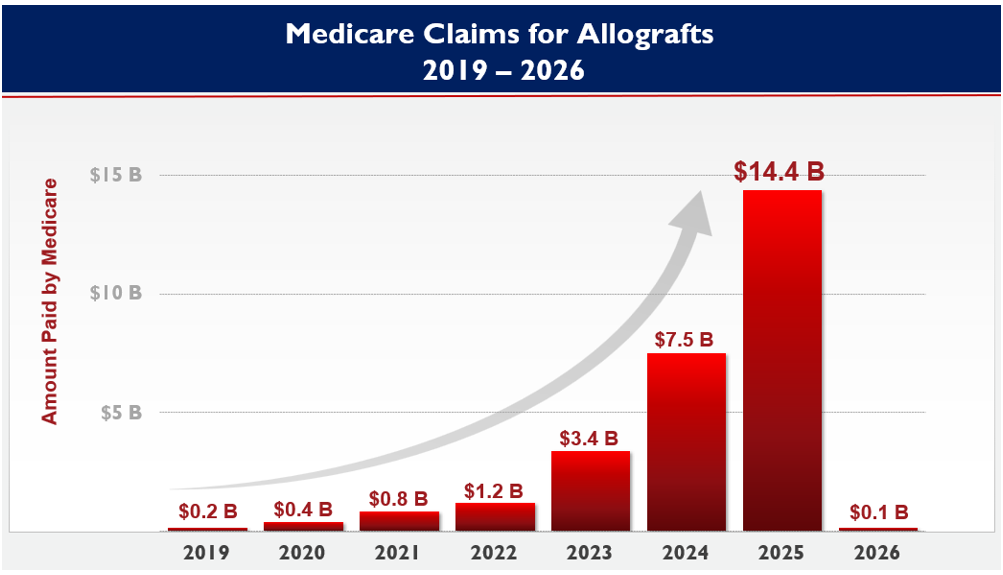
Eleven people, including eight medical professionals and a corporate executive, were charged in six districts in relation to false claims for amniotic wound allografts totaling billions of dollars. The vice president of sales for a firm that marketed allografts was accused of participating in a countrywide criminal kickback and health care fraud operation in the District of Arizona. For this company’s allografts, clinicians billed Medicare more than $4 billion between roughly December 2021 and June 2024, and Medicare paid more than $2 billion. It was claimed that a kickback scheme that produced large profit margins and opulent lives for participating marketers and providers was the cause of this notable increase in allograft billings rather than medical necessity.
Instead of producing allografts, the business purchased them from tissue banks, relabeled them, and sold them for up to $1,450 per square centimeter at a 2,000% markup. It is alleged that the defendant paid illicit kickbacks totaling around 40% of that sum, which allowed medical professionals and marketers to keep between $500 and $600 per square centimeter. Due to these lucrative kickbacks, the defendant and others allegedly targeted hospice patients and applied allografts to superficial wounds that did not require infection treatment, to areas that greatly exceeded the size of the wound, and without consulting the patients’ treating physicians.
The defendant got more than $24 million from the corporation, which he used to buy fine watches, luxury cars, including a $135,000 Maserati, multimillion-dollar homes, and million-dollar life insurance policies. This comes after sentences of 15.5 and 14 years were received in relation to the scam last year.
The Department intends to pursue both the Healthcare Fraud Cases architects and those who violate their oath to carry out the plan, as seen by today’s allegations. A nurse practitioner in the Southern District of Texas was prosecuted for a $906 million conspiracy in which she performed medically unnecessary allografts and, on average, billed Medicare over $1 million per patient.
As alleged, the defendant utilized the scam profits to acquire high-end automobiles, real estate, and expensive jewelry, and to support the development of a $4.6 million of a beach resort in the Philippines. The government confiscated nearly $30 million in bank accounts, a $594,000 Ferrari 296 GTS, seven other high-end automobiles, a $865,000 handmade Bulgari necklace, and $1 million worth of other fine jewels.
An alleged Medicare fraud scheme involving wound allografts resulted in the seizure of a $865,000 Bulgari necklace and the construction of a beach resort in the Philippines using $4.6 million that was purportedly pilfered from Medicare.
In a similar vein, three defendants were accused in the Middle District of Florida for their involvement in a $118 million allograft fraud scam in which a nurse practitioner reportedly used the earnings to finance her opulent lifestyle, which included over $400,000 in fine art and a luxury box at an NFL stadium.
Prosecutions resulted from the Healthcare Fraud Cases Unit’s Data Analytics Team identifying an increase in allograft payments. Beginning on January 1, 2026, CMS independently adjusted payment, lowering Medicare’s payment to $127 per square centimeter. The Part B premium rise brought on by allograft payments alone would have cost every Medicare member in the nation an additional $11 per month if CMS had not acted to curb the excessive expenditure on allografts.
CMS Administrator Dr. Mehmet Oz stated, “It is important to prosecute criminals who steal from American patients, but it is wiser to stop them before a single dollar leaves the building.” “CMS has finished catching up. We’re using sophisticated data analytics to uncover fraud networks, halt questionable transactions, and eliminate criminal actors before they can harm the programs that millions of Americans rely on.
Data Fusion Center, Financial Intelligence Review Team, and Data Analytics Enhancements
When it comes to using modern data analytics, the Healthcare Fraud Cases Unit is a pioneer. Many of the cases filed today made use of advanced analytics thanks to its Data Fusion Center, which was revealed as part of last year’s Takedown and is made up of specialists from the Unit’s Data Analytics Team, HHS-OIG, FBI, and other agencies. In relation to a $67 million scheme to bill Illinois Medicaid for behavioral Healthcare Fraud Cases services that were not rendered, the Department is announcing the first prosecution from the Fusion Center’s Financial Intelligence Review Team, which was established last year to combine traditional data analytics with financial analysis.
In addition to diverted over $27 million to brokerage accounts, $10 million to a luxury car dealership he established, $4 million for real estate purchases and home improvements, one million for jewelry, watches, and other luxury items, and over $616,022 for vehicles, the defendant allegedly submitted claims to Medicaid for 500 or more hours of counseling and therapy services per day—much more than the providers on staff could provide even if they worked around the clock. Within five days of the financial intelligence evaluation, the Health Care Fraud Unit’s specialist prosecutors launched an inquiry after data analysis revealed that patients were admitted to other hospitals on the days the defendant invoiced for mental health treatments.
Less than seven months later, the defendant was apprehended at the airport on Sunday night while trying to flee the nation.
A hospice owner and two marketers were charged in the Central District of California with a $27.7 million Medicare Healthcare Fraud Cases scheme. The hospice owner allegedly attempted to evade detection by purchasing information about the recently deceased from a funeral home employee. The defendant reportedly recruited people who weren’t terminally ill as part of a hospice fraud operation. The hospice owner allegedly paid illegal kickbacks of $1,000 to $3,000 per person to a funeral home employee in exchange for the information of deceased Medicare beneficiaries, raising concerns that Medicare and law enforcement used data analytics to monitor the percentage of patients discharged from hospice alive (an indicator of Healthcare Fraud Cases).
Pingback: Breaking : Mitch McConnel Praised For Decades Of Senate Leadership 2026 - Worldnewsupdates.online